Key takeaways
- Virtual contact centers use cloud technology to support remote agents across multiple customer channels.
- Cloud-based infrastructure enables flexibility, scalability, and cost savings without physical location constraints.
- Omnichannel tools and CRM integrations improve context, personalization, and customer experience continuity.
- Remote work improves agent satisfaction, reduces turnover, and expands access to global talent.
- Virtual contact centers deliver operational efficiency, better service quality, and competitive advantage for modern businesses.
Virtual contact centers have emerged as a cornerstone for businesses aiming to enhance customer engagement and service delivery. This comprehensive guide offers a deep dive into virtual contact centers, providing essential insights for contact center professionals. We'll explore what virtual contact centers are, their operational mechanisms, key defining factors, and the myriad benefits they offer to companies, agents, and customers alike.
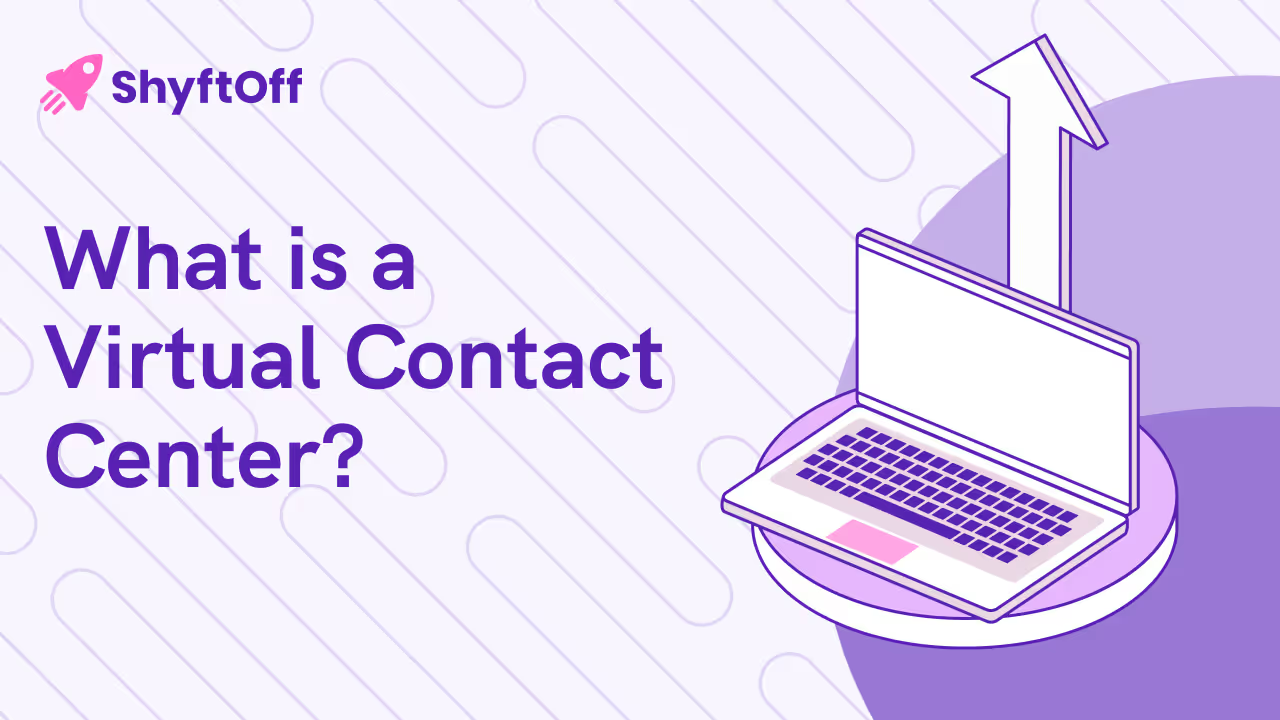
A virtual contact center operates on a cloud-based communication infrastructure, enabling customer service agents to work remotely while maintaining seamless communication channels with customers across multiple touchpoints. Unlike traditional contact centers, which require physical premises for operations, virtual contact centers leverage internet technology to bridge the gap between agents and customers, regardless of geographical location. This modern approach to customer service encompasses phone, email, web chat, social media, and other digital communication platforms, offering a holistic and integrated customer experience.
How Virtual Contact Centers Operate
The operational backbone of a virtual contact center lies in its cloud-based software and operational model, which provides a unified platform for managing customer interactions across various channels. This software is accessible from anywhere, allowing agents to log in from remote locations and access the tools and information needed to assist customers effectively. A true virtual contact center model understands how to operate a remote, flexible team–either using gig agents or fully remote talent.
Key components of a virtual contact center infrastructure include:
- Automatic Call Distribution (ACD): This technology ensures incoming calls are routed to the appropriate agent based on predefined criteria, such as skill set, availability, or customer need.
- Interactive Voice Response (IVR): IVR systems guide callers through options, enabling self-service for straightforward inquiries and routing more complex issues to live agents.
- Customer Relationship Management (CRM) Integration: Virtual contact centers often integrate with CRM systems, providing agents instant access to customer histories and personalizing the customer service experience.
- Omnichannel Support: A hallmark of virtual contact centers, omnichannel support ensures a cohesive customer experience across all communication platforms. It allows customers to switch between channels without losing context or having to repeat information.
Key Factors that Define Virtual Contact Center
Several key factors distinguish virtual contact centers from traditional models, including:
- Flexibility and Scalability: Virtual contact centers can easily adjust to fluctuating demand, adding or reducing agent numbers without physical space constraints.
- Cost Efficiency: Companies can significantly reduce overhead costs by eliminating the need for physical infrastructure and allowing agents to work remotely.
- Enhanced Agent Experience: Remote work options can lead to higher job satisfaction and lower agent turnover rates by offering a better work-life balance.
- Advanced Analytics and Reporting: Virtual contact centers provide comprehensive analytics and real-time reporting capabilities, enabling data-driven decision-making to optimize customer service strategies.
Benefits of Virtual Contact Centers
Virtual contact centers offer many benefits to companies, agents, and customers, making them an attractive option for modern businesses. Some of these benefits include:
For Companies
- Operational Efficiency: By leveraging cloud technology, companies can streamline customer service operations, reduce downtime, and increase overall efficiency.
- Global Talent Pool: Virtual contact centers enable businesses to hire the best talent, regardless of geographical constraints, ensuring high-quality customer service.
- Competitive Advantage: Virtual contact centers' flexibility, scalability, and cost-efficiency can give companies a competitive edge in customer service excellence.
For Agents
- Work Flexibility: The ability to work remotely offers agents greater flexibility and can lead to improved work-life balance and job satisfaction
- Diverse Work Experience: Agents can interact with a wide range of customers and handle various inquiries, enhancing their skills and experience.
For Customers
- Improved Service Quality: With skilled agents and advanced technology, virtual contact centers can offer superior customer service, leading to higher satisfaction.
- Convenience and Accessibility: Customers benefit from multiple communication channels and 24/7 support, which makes it easier for them to get help whenever and however they prefer.
Virtual contact centers represent a transformative shift in how businesses approach customer service. By embracing cloud technology, companies can offer their customers more flexible, efficient, and high-quality service while providing a better work environment for their agents. As the business landscape continues to evolve, virtual contact centers will undoubtedly play a pivotal role in shaping the future of customer engagement. For contact center professionals, understanding the intricacies of virtual contact centers is essential to successfully navigating this new era of customer service.
For more insights on how GigCX is designed for complex work, you might be interested in the following resources from our blog:
- What is Contact Center Optimization? A Refresher for Leaders
- How to Optimize Contact Center Training for Performance
- Contact Center Optimization Strategies for High-Performance
Interested in augmenting your contact center operations with GigCX?
Contact our team to get started.
Frequently Asked Questions
How does a virtual contact center differ from a traditional contact center?
Unlike traditional contact centers that require physical premises for operations, virtual contact centers leverage internet technology to connect agents and customers regardless of geographical location, eliminating the need for on-site infrastructure.
What key technologies power virtual contact centers?
Virtual contact centers use Automatic Call Distribution (ACD) for routing calls, Interactive Voice Response (IVR) for self-service options, CRM integration for personalized service, and omnichannel support to ensure consistent customer experiences across all platforms.
What are the main benefits of virtual contact centers for companies?
Companies gain operational efficiency through streamlined processes, access to a global talent pool without geographical constraints, significant cost savings by eliminating physical infrastructure, and a competitive advantage through flexibility and scalability.
How do virtual contact centers improve the agent experience?
Agents benefit from remote work flexibility that enhances work-life balance, exposure to diverse customer interactions that build skills, and access to integrated tools like CRM systems that make their jobs easier and more satisfying.
Can virtual contact centers scale quickly to meet demand fluctuations?
Yes, virtual contact centers can easily adjust agent numbers up or down based on demand without physical space constraints, making them ideal for handling seasonal peaks or unexpected volume changes.
What customer benefits do virtual contact centers provide?
Customers receive improved service quality from skilled agents using advanced technology, convenient access through multiple communication channels, and 24/7 support availability for assistance whenever and however they prefer.

Explore more of our Blogs

















%2520(1)%2520(1).avif)



.avif)

.avif)



.avif)




.avif)


.avif)




%2520(2).avif)





.avif)

More of our Resources
Our Blogs
The solution has been deployed across more than 125 tourism organizations
Our Webinars
The solution has been deployed across more than 125 tourism organizations
Our Guides
The solution has been deployed across more than 125 tourism organizations
Our Stories
The solution has been deployed across more than 125 tourism organizations
Our Podcasts
The solution has been deployed across more than 125 tourism organizations
Our Events
The solution has been deployed across more than 125 tourism organizations