Key takeaways
- Clear, well-communicated goals significantly increase agent engagement and performance.
- SMART goals provide structure, clarity, and measurable outcomes for contact center teams.
- Involving agents in goal-setting boosts motivation and ownership.
- Visual dashboards and regular reviews keep goals visible and adaptable.
- Accountability, recognition, and feedback sustain long-term performance improvements.
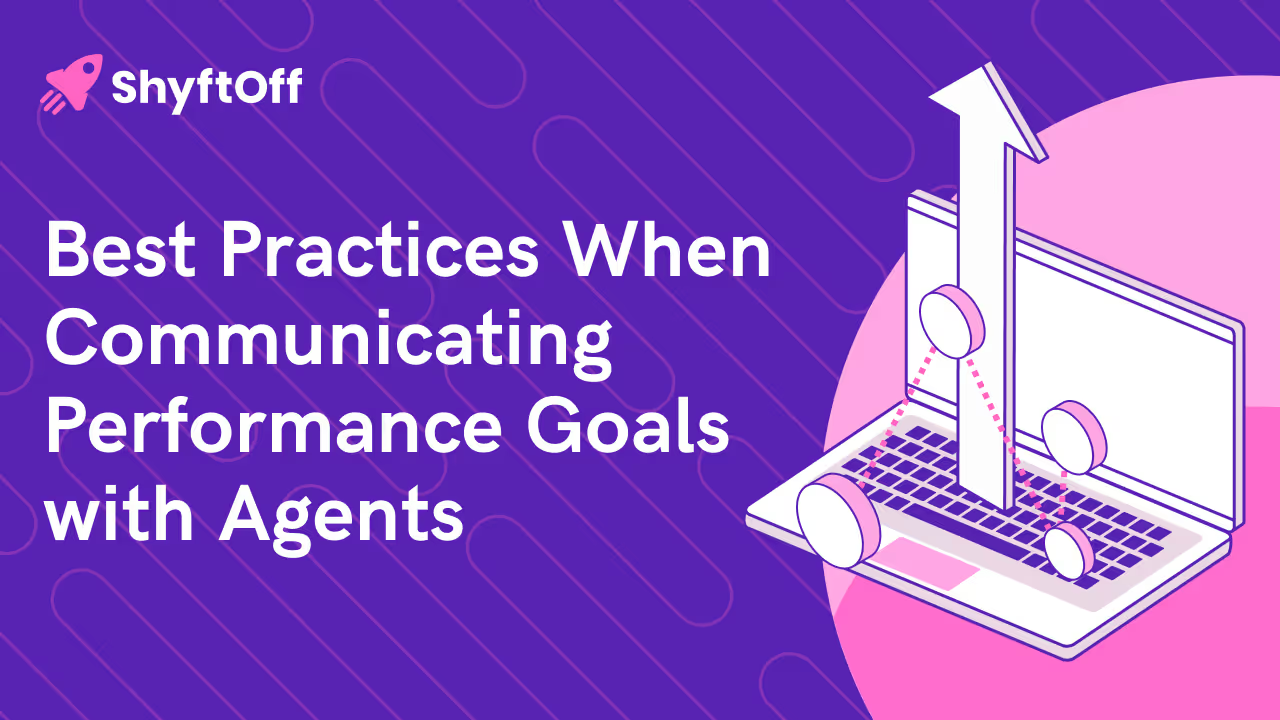
The importance of effective goal communication with your contact center agents cannot be overstated. At ShyftOff, transparent and effective communication is key to ensuring our on-demand agents are always on top of their performance goals to best serve our contact center partners. In this blog post, we'll delve into proven strategies and tactics to ensure seamless goal communication within your contact center, fostering a motivated and high-performing team.
The Power of Clear and Aligned Goals
There is an undeniable power of setting clear and aligned goals in a contact center environment. Research has consistently shown that teams working toward well-defined goals exhibit higher levels of engagement, motivation, and overall performance. A study by Gallup revealed that employees who understand their goals are 3.6 times more likely to be engaged at work.
However, it's not just about setting goals – it's about communicating them effectively. Here's how you can do just that:
Develop SMART Goals
The first step to effective goal communication is crafting SMART goals – Specific, Measurable, Achievable, Relevant, and Time-bound. These goals provide clarity and structure, enabling agents to understand precisely what's expected of them. Furthermore, SMART goals make it easier to measure progress and success.
For instance, instead of a vague goal like "Improve customer satisfaction," refine it to something like "Increase Net Promoter Score (NPS) by 10 points in the next three months." This specific and measurable target leaves no room for ambiguity.
Collaboratively Set Goals
To truly engage your agents in the goal-setting process, involve them in the conversation. Research from the University of California, Berkeley, shows that employees who have a say in their goal-setting are more motivated to achieve those goals. Hold regular meetings or workshops where agents can provide input and help set their own targets within the broader organizational objectives.
Provide Context and Purpose
Agents are more likely to be invested in their goals when they understand the bigger picture. Share the company's mission, vision, and values, and explain how their individual goals contribute to these broader aspirations. This connection to a higher purpose not only motivates agents but also fosters a sense of ownership and pride in their work.
Implement Visual Metrics and Dashboards
Visual aids can significantly enhance goal communication. Consider using dashboards that display real-time progress toward team and individual goals. Studies suggest that visual feedback can lead to performance improvements of up to 18%. Make sure your dashboards are easily accessible and updated regularly. Many tools are available to do this, but you can easily accomplish this with something as readily available as an Excel spreadsheet. Don’t overcomplicate this process–as a baseline starting point is enough to help get your team excited about following their metrics.
Regularly Review and Adjust Goals
Contact centers operate in dynamic environments, and goals should reflect these changes. Encourage ongoing feedback and review sessions to ensure goals remain relevant and achievable. Adjustments may be necessary as market conditions, customer expectations, and technology evolve. Your customer feedback should be your driving force in how you review and adjust goals.
Foster a Culture of Accountability
Accountability is essential for goal achievement. Encourage agents to take ownership of their goals and be responsible for their progress. Implement a system of regular check-ins where agents can report on their progress, discuss challenges, and seek support when needed. Be sure to keep an open environment where feedback, either constructive or critical, is welcomed. It is also suggested that you train your leadership on how to convey information in ways that are objective to avoid creating an environment where accountability is hard to execute.
Celebrate Milestones and Achievements
Recognize and celebrate both individual and team achievements. A study by Harvard Business Review found that organizations that celebrate their employees' successes enjoy increased employee engagement and productivity. Small gestures like shout-outs in team meetings or rewards for hitting milestones can go a long way in motivating your agents.
Seek Agent Feedback
Lastly, never underestimate the power of agent feedback. Regularly solicit input from your agents on the goal-setting process and their experiences with it. Use their insights to refine your approach and make continuous improvements. After all, your agents are on the frontlines and know firsthand what your customers care about. Creating forums or dedicated time to collect their feedback can be invaluable to your organization.
In conclusion, effective goal communication in your contact center is a multifaceted process that requires a strategic and thoughtful approach. By crafting SMART goals, involving agents in the process, providing context, and fostering a culture of accountability, you can set your team on a path to success. Remember, clear and aligned goals not only boost performance but also enhance job satisfaction, leading to a more engaged and motivated workforce.
As you implement these best practices, keep in mind that the contact center landscape is continually evolving. Stay attuned to industry trends, emerging technologies, and evolving customer expectations. By doing so, you'll ensure that your contact center remains a well-oiled machine, delivering exceptional customer experiences and achieving outstanding results.
Interested in augmenting your contact center operations with GigCX?
Contact our team to get started.
Frequently Asked Questions
What are SMART goals and why are they important for contact center agents?
SMART goals are Specific, Measurable, Achievable, Relevant, and Time-bound objectives that provide clarity and structure for agents. For example, instead of "Improve customer satisfaction," a SMART goal would be "Increase Net Promoter Score (NPS) by 10 points in the next three months," leaving no room for ambiguity.
How can I involve agents in the goal-setting process?
Hold regular meetings or workshops where agents can provide input and help set their own targets within broader organizational objectives. Research shows that employees who have a say in their goal-setting are more motivated to achieve those goals.
Why should agents understand the bigger picture behind their goals?
Agents are more invested in their goals when they understand how their individual targets contribute to the company's mission, vision, and values. This connection to a higher purpose motivates agents and fosters a sense of ownership and pride in their work.
What tools can I use to track and display agent performance goals?
Visual dashboards that display real-time progress toward team and individual goals are highly effective, with studies suggesting visual feedback can lead to performance improvements of up to 18%. You can start with something as simple as an Excel spreadsheet rather than overcomplicating the process.
How often should performance goals be reviewed and adjusted?
Goals should be reviewed regularly through ongoing feedback sessions to ensure they remain relevant and achievable as market conditions, customer expectations, and technology evolve. Customer feedback should be your driving force in how you review and adjust goals.
How can I create a culture of accountability around performance goals?
Implement regular check-ins where agents report on progress, discuss challenges, and seek support when needed. Keep an open environment where constructive and critical feedback is welcomed, and train leadership to convey information objectively.
What role does recognition play in communicating performance goals?
Celebrating both individual and team achievements increases employee engagement and productivity. Small gestures like shout-outs in team meetings or rewards for hitting milestones can significantly motivate agents.
Why is agent feedback important in the goal communication process?
Regularly soliciting input from agents on the goal-setting process helps refine your approach and drive continuous improvements. Your agents are on the frontlines and know firsthand what your customers care about, making their insights invaluable to your organization.

Explore more of our Blogs




















%2520(1)%2520(1).avif)




.avif)
.avif)
.avif)


.avif)


.avif)




%2520(2).avif)




.avif)

More of our Resources
Our Blogs
The solution has been deployed across more than 125 tourism organizations

Our Webinars
The solution has been deployed across more than 125 tourism organizations
Our Guides
The solution has been deployed across more than 125 tourism organizations
Our Stories
The solution has been deployed across more than 125 tourism organizations
Our Podcasts
The solution has been deployed across more than 125 tourism organizations
Our Events
The solution has been deployed across more than 125 tourism organizations